
Introduction: Why Mesenchymal Stem Cells Remain Central to Experimental Biology
Mesenchymal Stem Cells (MSCs)—also referred to as mesenchymal stromal cells—are among the most widely studied cell types in basic, translational, and preclinical laboratory research. Their ability to self-renew, differentiate into multiple mesodermal lineages, and interact dynamically with surrounding cells makes them a foundational model system across numerous biological disciplines.
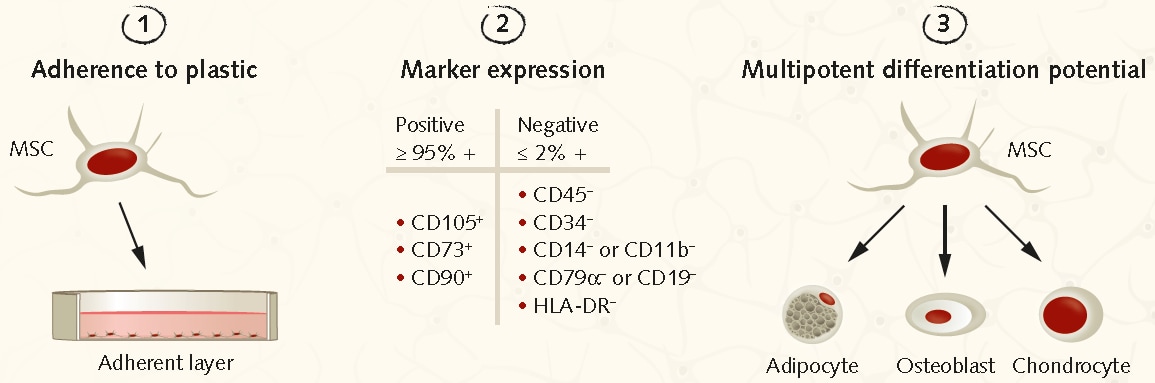
According to the National Cancer Institute, mesenchymal stem cells are defined as multipotent stromal cells capable of differentiating into osteoblasts, adipocytes, and chondrocytes
(https://www.cancer.gov/publications/dictionaries/cancer-drug/def/mesenchymal-stem-cell).
In laboratory settings, MSCs are not used as therapeutic agents, but rather as highly adaptable research tools that enable mechanistic studies in:
-
Cell differentiation and lineage commitment
-
Immune cell interaction and signaling
-
Tissue remodeling and matrix biology
-
Extracellular vesicle (EV) and exosome research
-
Transcriptomic, epigenomic, and proteomic discovery

Biological Characteristics That Make MSCs Ideal for Research Models
Plastic Adherence and In-Vitro Stability
MSCs readily adhere to standard tissue-culture plastic, allowing robust expansion under defined conditions. This practical feature supports longitudinal experiments, multi-passage studies, and comparative assays.
The National Institutes of Health provides extensive background on stromal cell culture systems via PubMed Central
https://pmc.ncbi.nlm.nih.gov/articles/PMC6431372/
Multipotent Differentiation Capacity
Under lineage-specific induction conditions, MSCs differentiate into:
-
Osteogenic lineage (mineralization, alkaline phosphatase activity)
-
Adipogenic lineage (lipid droplet accumulation)
-
Chondrogenic lineage (proteoglycan and collagen II expression)
A comprehensive academic overview of MSC differentiation assays is available through the University of North Carolina
https://bme.unc.edu/wp-content/uploads/sites/917/2022/04/Stem-Cells-2014-Lv.pdf
MSC Phenotyping and Identity Verification in the Laboratory
Surface Marker Profiling
Flow cytometry remains a cornerstone technique for MSC characterization. Commonly evaluated markers include:
-
Positive expression: CD73, CD90, CD105
-
Negative expression: hematopoietic and endothelial markers
An academic discussion on MSC marker variability can be found at the University of California, San Diego
https://muscle.ucsd.edu/pubs/pdf/Ruoss_AJSM_2021.pdf
Cell Identity and Authentication
While MSCs are often primary-like cultures, identity control remains critical, particularly in long-term studies.
The National Institute of Standards and Technology outlines best practices for human cell identity control
https://www.nist.gov/programs-projects/cell-line-authentication/cell-line-id-and-authentication-human-cell-lines
Additional guidance from the National Center for Biotechnology Information
https://www.ncbi.nlm.nih.gov/books/NBK144066/
MSC Co-Culture Systems and Immunology Research
MSCs are frequently used in co-culture models to study:
-
Cell–cell contact signaling
-
Paracrine communication
-
Cytokine and chemokine regulation
These systems are widely applied in immunology, inflammation biology, and tissue microenvironment modeling.
A peer-reviewed overview from PubMed discusses MSC-mediated immune signaling mechanisms
https://pubmed.ncbi.nlm.nih.gov/32709406/
MSC Secretome, Extracellular Vesicles, and Exosome Research
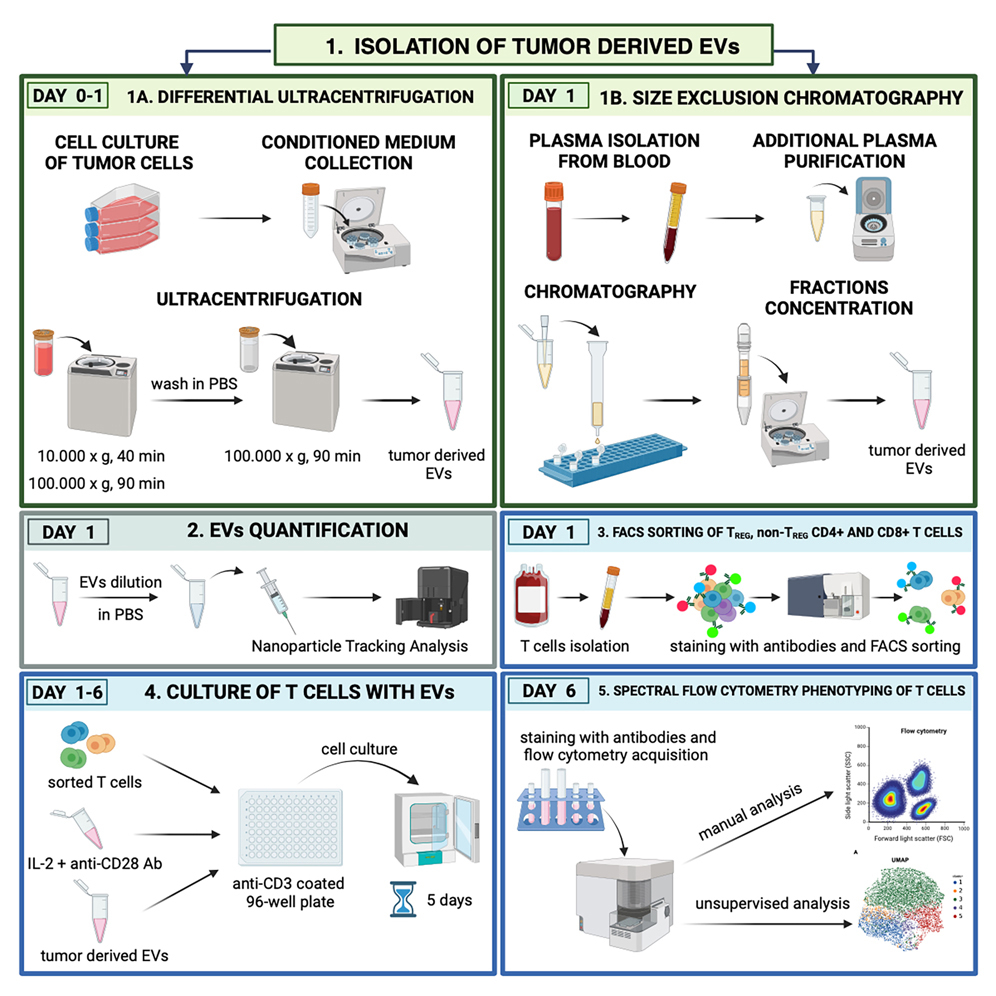
One of the fastest-growing MSC research areas is the study of the MSC secretome, including extracellular vesicles (EVs) and exosomes.
Laboratory applications include:
-
Conditioned media signaling studies
-
EV-mediated protein and RNA transport
-
Biomarker discovery
Widely cited protocols and methodological references include:
-
NIH-indexed exosome isolation overview
https://pubmed.ncbi.nlm.nih.gov/25820723/ -
Optimized culture supernatant processing
https://pubmed.ncbi.nlm.nih.gov/26194179/ -
Detailed EV isolation comparison (PMC)
https://pmc.ncbi.nlm.nih.gov/articles/PMC8088761/ -
Recent methodological advances (2024, PMC)
https://pmc.ncbi.nlm.nih.gov/articles/PMC10902684/
Tissue Engineering and Biomaterials Research Using MSCs
MSCs are extensively used in biomaterials and tissue engineering laboratories to evaluate:
-
Scaffold composition and stiffness
-
Surface chemistry and cell adhesion
-
Mechanical cues influencing lineage fate
The U.S. National Library of Medicine hosts multiple open-access reviews on MSC-based tissue models
https://pubmed.ncbi.nlm.nih.gov/31815001/
Omics and Systems Biology Applications
Because MSCs respond dynamically to environmental cues, they are ideal for:
-
RNA sequencing (bulk and single-cell)
-
Epigenomic profiling (ATAC-seq, ChIP-seq)
-
Proteomics and phosphoproteomics
A comprehensive review of MSC molecular profiling is available via PubMed Central
https://pmc.ncbi.nlm.nih.gov/articles/PMC6364749/
Regulatory and Documentation Awareness (Research Context Only)
For laboratories maintaining structured documentation, regulatory frameworks are often cited for awareness only, not for clinical intent.
Key U.S. government references include:
-
U.S. Food and Drug Administration – HCT/P overview
https://www.fda.gov/regulatory-information/search-fda-guidance-documents/regulation-human-cells-tissues-and-cellular-and-tissue-based-products-hctps-small-entity-compliance -
eCFR Title 21 Part 1271
https://www.ecfr.gov/current/title-21/chapter-I/subchapter-L/part-1271 -
FDA tissue guidance portal
https://www.fda.gov/vaccines-blood-biologics/biologics-guidances/tissue-guidances
Why High-Quality MSC Products Matter in Research
When selecting Mesenchymal Stem Cells for laboratory use, researchers typically evaluate:
-
Documented origin and handling conditions
-
Reproducible growth and morphology
-
Compatibility with differentiation, co-culture, and EV workflows
-
Clear research-use-only positioning
Well-characterized MSC products support reproducibility, inter-lab consistency, and high-impact publication outcomes.
Mesenchymal Stem Cells (MSCs) are indispensable tools in modern biological research, enabling differentiation studies, immune interaction modeling, extracellular vesicle analysis, tissue engineering, and multi-omics discovery. Supported by extensive .edu and .gov literature, MSC-based experiments continue to advance our understanding of cellular communication and functional biology in controlled laboratory environments.