
Introduction to TUNEL Assay
The TUNEL (Terminal deoxynucleotidyl transferase dUTP Nick End Labeling) assay is a widely used technique for detecting apoptotic DNA fragmentation. This method is essential in cell biology, neuroscience, and cancer research to study programmed cell death (NIH.gov). The One-Step TUNEL In Situ Apoptosis Kit (Green, AF488) provides an efficient and sensitive method for in situ apoptosis detection using fluorescence microscopy (NCI.gov).
Mechanism of Action
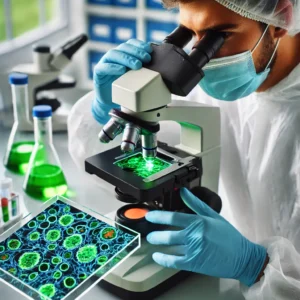
The kit utilizes Terminal deoxynucleotidyl transferase (TdT) to label the 3’-OH ends of fragmented DNA with fluorescently tagged dUTPs (AF488), which can then be visualized under a fluorescence microscope (NIH.gov). This green fluorescence (Alexa Fluor 488) allows for easy differentiation between apoptotic and non-apoptotic cells (NCBI.nlm.nih.gov).
Applications in Research
Cancer Studies
Apoptosis plays a crucial role in cancer progression and treatment (Cancer.gov). The TUNEL assay is frequently employed to evaluate the efficacy of chemotherapeutic agents and radiation therapy in inducing apoptosis in tumor cells (NCI.gov).
Neuroscience
In neurodegenerative diseases such as Alzheimer’s disease, Parkinson’s disease, and Huntington’s disease, excessive apoptosis leads to neuronal loss (NIH.gov). The TUNEL assay enables researchers to quantify apoptosis in affected brain tissues (PubMed.ncbi.nlm.nih.gov). It is also used to determine the impact of traumatic brain injuries and stroke on neuronal cell death, providing critical data for therapeutic interventions (NSF.gov).
Developmental Biology
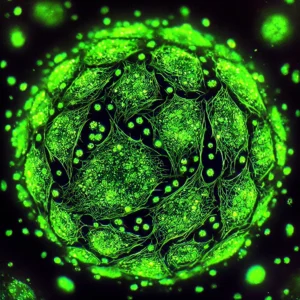
Programmed cell death is a critical process in embryonic development, regulating tissue formation (NCBI.nlm.nih.gov). The One-Step TUNEL In Situ Apoptosis Kit (Green, AF488) is commonly used in developmental biology studies (NIH.gov). By detecting apoptotic cells during embryogenesis, researchers gain insight into developmental abnormalities and potential congenital disorders (HHS.gov).
Advantages of One-Step TUNEL Kit (Green, AF488)
- High Sensitivity: Detects even low levels of DNA fragmentation (FDA.gov).
- Fluorescent Labeling: Uses Alexa Fluor 488, which provides superior signal-to-noise ratio compared to conventional dyes (CDC.gov).
- Quick and Efficient: The one-step method simplifies the traditional multi-step TUNEL protocol (NSF.gov).
- Compatible with Various Samples: Works with tissue sections, cultured cells, and paraffin-embedded samples (HHS.gov).
- Minimal Background Noise: Optimized buffer conditions ensure minimal background staining for clear and precise results (NCI.gov).
Protocol Summary
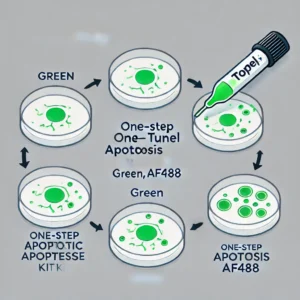
- Fixation and Permeabilization: Cells or tissues are fixed with paraformaldehyde and permeabilized with Triton X-100 to allow enzyme access (NIH.gov).
- TUNEL Reaction: The TdT enzyme incorporates AF488-labeled dUTPs into fragmented DNA strands.
- Fluorescence Detection: Apoptotic cells are observed under a fluorescence microscope using the FITC filter set (NCBI.nlm.nih.gov).
- Counterstaining (Optional): Cells can be counterstained with DAPI or PI for nuclear visualization (NIH.gov).
Interpretation of Results
- Bright Green Fluorescence: Indicates apoptotic cells (PubMed.ncbi.nlm.nih.gov).
- No Fluorescence: Indicates live or necrotic cells lacking DNA fragmentation (NCI.gov).
Troubleshooting & Considerations
- Low Signal: Ensure optimal enzyme concentration and incubation time (NIH.gov).
- High Background: Reduce nonspecific staining by optimizing the washing steps (FDA.gov).
- Overfixation Issues: Use fresh 4% paraformaldehyde and avoid long fixation times (CDC.gov).
- Storage Considerations: Store reagents at -20°C and avoid repeated freeze-thaw cycles to maintain enzyme activity (NSF.gov).
Conclusion
The One-Step TUNEL In Situ Apoptosis Kit (Green, AF488) is a powerful tool for detecting apoptosis in various research applications. Its high sensitivity, ease of use, and compatibility with different sample types make it a preferred choice for researchers investigating cell death mechanisms. More information about apoptosis detection can be found through government and academic resources such as the National Institutes of Health (NIH), Centers for Disease Control and Prevention (CDC), and National Science Foundation (NSF).
For protocol details and troubleshooting guides, refer to trusted scientific resources like PubMed, NCBI, and FDA.